There's been a lot of these floating around lately so I thought that I would just add to the noise...
DON'T DATE SOMEONE WHO TRAVELS for they are clearly not career focussed and know more about life and culture than they do about conformist slavery and mortgages.
They can’t be relied upon for funding those weekend trips to malls to buy things you don’t even need to impress people you don’t even like.
Don’t date someone who travels because they are good with budgeting and otherwise termed ‘cheapskates’. They know that a typical $80 dinner for two equates to a week of accommodation in India or three days worth of royal treatment and adventure activities in Central America or Asia.
Don’t date someone who travels because you will never be able to impress them with your belongings, work achievements or general bragging. They don’t care about your favourite soaps and dramas, the current reality television craze or the facts that your coffee mugs match your coasters.
Don’t date someone who travels because their life focus is completely different to yours. They will most likely be focussed on experiences and memories that they feel no need to tell anyone about. There are too many and you will likely never be able to relate. They have given up because all their stories have been met with blank expressions or jealousy and conversations that have been steered towards episodes of ‘The voice’ , ‘The Biggest Loser’, or ‘Xxx Idol’. Such conversations send them looking for the first plane to the other end of the earth.
Don’t date someone who travels because they are extremely selfish. They care only about themselves and want to understand the world. They leave their homes, country and culture looking for hope and meaning because they seek a universal truth.
Don’t date someone who travels because they have spent their lives getting to know their own humanity. They look at life the way someone looks at the stars - it is infinite, a journey never-ending. They have become so caught up in this that the conventional life has little meaning. It seems irrational, a predictable and costly repetition. They have found more exciting alternatives.
Don’t date someone who travels because they will piss you off. They will turn you upside down and empty all of the contents. They will ruin you and everything that you believe in. They will force you to face your fears and encourage you to expand the limits of your personal boundaries. They will look you in the eyes and ask questions that only you can answer.
They will spend a bulk of their free time researching the feasibility of climbing peaks in Kyrgyzstan or overlanding through West Africa.
They are unpredictable and spontaneous.
They are a combination of capitalism, communism and subsistence farming hippies.
They have the ability to embrace standard muesli and milk like it is the nectar of kings.
They look at 5 star hotels and yawn, calculating the price of every fake smile.
Don’t date someone who travels because you know it already. You know it all. There is no life with them. They are a flash in the pan. They will struggle when it comes to raising a family. They will struggle when it comes to retirement. They will end up nothing but glorious memories with nothing to their name. They will embrace their share of oxygen to the very end.
Is this your view of someone who travels? Are they unreliable? Undependable? Beggars asking for one more chance to dream?
Do they live in a fantasy land in which the real world never meets, or do they embrace the world for what it really is?
Good. Find someone just like you. Build a picket fence around all that you strive for and cast your photos into the annals of history.
One day you will probably look a traveller eye to eye and you will both scratch your head. You will be caught at odds and both ask the same question: “What will you do with your life?” One answer will be obvious and the other will remain an unfolding mystery.
Don’t date a traveller because they are self important, egotistic and arrogant. They will look upon the life that you want to live and have the cheek that they can do it better.
Don’t date a traveller because they aim at turning the mundane into the remarkable. They are lost to the world, but in themselves they are found.
"I really like it here" said the male bird to the female.
He traces his main claw, drawing small circles in a puddle of water on the rocky part of the bay.
"It's nice, this corner of the earth. It's not too hot but the sun is strong and the air is fresh."
The female bird looks at him longingly.
"Do you come here often for vacation?" she inquires.
The male bird looks intensely into her eyes and takes a purposeful step backwards as a stone flies directly in front of his face, the exact place where he had just been standing.
"Often" says the male bird disregarding the stone's threat casually. "But I go other places as well. There is a lot to explore and many nice places to pass a summer.
Both birds hear a stone pass sailing over their heads. This one is well off it's mark, as were the majority of stones in the 10 minutes prior.
They turn their heads and regard the stone's source, a freckled eight year old kid who sits on a driftwood log. He searches at his feet and looks for more suitable stones to throw.
"And how about work?" The female bird asks intrigued. She is a hint playful but also serious. "Where do you go?"
"I usually breed amongst the chain islands in the Berring Sea" he replied. "I enjoy the remoteness, the peace after snow-melt. There, I find a certain freedom in the wind."
"The Aleutians? Me too. Do you have a preferred island?"
The male bird tilts his head to the side and thinks. There were so many islands, each one with its charms.
"I'm going to have to go with Kiska" he chooses finally.
"Oh, I'm not sure I know it."
The male bird nods knowingly. He thought as much. "It is a small island" he explains. "But not too small by Aleutian standards. Most flock to Attu, but I find Attu crowded. Kiska is what Attu was in the 70's."
The female bird is impressed. "Kiska eh? I'll have to check it out. Maybe I'll breed there in the next Northern summer. Do you have a breeding partner?"
"Not yet. Do you?"
"No" she replies and smiles.
Both birds hop closer together, each hop slow and delicate, their respective momentum driven by shiny notions seen in each others eyes. Their beaks are almost touching, the air warmer from each others breathing, when suddenly the male bird extends his wing and quickly pushes the female bird away. He does it just in time as a bullet like stone passes directly between them, the speed and force ten times greater than what they had been contending with before.
Startled, they each turn their heads and regard it's source. The boy's father now sits on the log beside him and joins him in searching for suitable throwing stones.
"Want to get out of here?" the male bird asks.
She nods and both birds take flight.
"I know a good spot over the headland. There are less people there. None of the city holiday campers like we get here."
"Why do you think the humans hate us birds so much?" the female bird asks.
"I don't know" replied the male, effortlessly floating into the sky.
They watch as both father and son stand up from their log now and hurl stones rapidly with all of their might. They grow smaller and smaller, like tiny ants, the power and trajectory of their throws pathetic and feeble.
They extend their wings and glide through the air with ease. The earth taking shape beneath them. Their paths careless, unencumbered.
"I have no idea at all. Perhaps they long to be free?" he muses.
"Have you been to the Hawaiian islands? Kauai in particular is magic this time of year..."
When we were kings we were welcomed by hands
And they carried us throughout the city
We held banquet feasts for the thousands
And sent music through the streets
After rains on fractured earth
we waged war to defend our walls
And not just defence but territories advanced
we marched. Us mighty kings!
Now they search for us digging brick by brick
They find fragments of our pots and pans
They speculate about our parties, our extravagance
Their minute minds!
Of how we navigated the stars and planned crops at solstice
How we slayed our foes and offered to god
Our immortal empire carved into obsidian
Children run on the earth above us now
Men and women peddle souvenirs to tourists
Our empire in plastic, our images in wood!
They seek shade under the same trees we did
They pass time playing music from tinny speakers
Rap songs of reconstituted beats;
and how desperate they are for everyone to remember their name
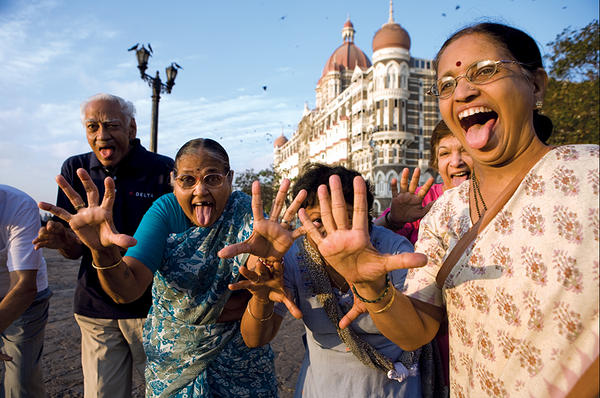
AS THE GLOWING orange ball slowly spluttered its way up through the Mumbai fog past India gate, I found a gang of locals slowly form a circle about me. They stretched their hands to the sky and exhaled, then started to stretch their torsos, loosened their necks. They stared at me as they went about their business. All of them. They inhaled and exhaled and proceeded to jump on the spot. A spritely elderly man yelled something in Hindi and they began to march clockwise with raised knees.
I was in the process of leaving the circle when a short wiry fellow, bones thatched together with twine, hit me and indicated that I should march too.
There was no reason for me to be in India, and such was the logic of my arrival - logical abandonment. I looked at the man seriously and raised a leg. We marched several laps and then changed direction, everyone a bizarre collection of swinging arms and onomatopoeic rhythm of stamping steps. Was this what I had actually come to expect of India?
Perhaps.
The leader shouted something else and everyone stopped. They took deep breaths and then broke out into laughter. Were these people serious? I was thinking. And so started a series of breathing exercises; deep breaths and then slow exhalations of laughter outwards, shaking different body parts in the process.
The wiry Indian man beside me gave me a nudge and indicated that I should be doing the same as everyone else as I was also part of the circle.
And so I took a deep breath in. "Hahahahaha" I exhaled holding my right arm out in front of me, shaking it. I looked to the wiry man beside me as I did this and he nodded in approval.
"Okay" said the leader. He was serious. A man on a mission, but there was also a glint in his eye. Everyone stopped what they were doing and looked to him.
The leader proceeded to clap three times with his hand above his head and then broke out into a fit of laughter such that he started to double over and had to brace his hands on his knees to remain upright.
I watched as the circle began to follow suit. First the overhead clapping, then the hysterical laughter. Some were faking it, some were completely out of control.
I looked around me and noticed that we had some on-lookers. The wiry man beside me noticed me doing this and shook his head. He reached skyward, clapped, then looked back at me before giving an exaggerated laugh. "HA! HA! HA! HA!" he said.
I nodded and reconfigured my stance as if to postulate that I now meant business. I raised my hands above my head and clapped, then let out a laugh: "Ha? Ha? Ha? Ha?" I said.
The wiry man was disappointed. He shook his head.
He inhaled deeply and clapped again. "HA! HA! HA! HA!" he explained, with extra emphasis on each 'HA'.
I performed the exercise again. "HA. HA. HA. HA" I said.
I looked to the wiry man for approval. He scrunched his lips together and bobbed his head from side to side as if indicating that I had shown some improvement.
We performed the exercise again, but this time together.
"HA! HA! HA! HA! HA!" we let out in unison until we were both hunched forwards.
The wiry man straightened up and looked at me seriously. He nodded as he took his next breath and proceeded to clap. I did the same.
"HA! HA! HA! HA! HA! HA!"
I started to understand the exercise. We looked at each other and smiled, then inhaled and clapped again. I learnt that laughter was better in unison, laughter was about letting yourself go. This time i decided to go for maximum volume. My lungs were bigger than his. I would destroy him with my laughter.
"HA! HA! HA! HA! HA! HA!!!!" My laugh was a giant's and his was an ant's, only this time I did not stop laughing as I had intended to and neither did he. We both continued laughing uncontrollably, involuntarily. We laughed at each other and at ourselves. We laughed at the ridiculous exercise in which we were participating.
The Indian man smiled and petted me on the back. He indicated that I had now understood. I had been released. Self consciousness had departed.
I laughed as he laughed. We laughed together. We fanned each other's laughter flames. Soon the whole circle was engulfed in laughter, each one a catalyst for the other. I did not know these people but we were sharing one of the most amazing things there was and no words needed to be spoken.
Soon we were jumping around like kangaroos on the spot. "Australia!" said the guru. We laughed and jumped around like drunken idiots.
Next thing we were roaring at each other like lions and showing our claws. "Africa!" said the guru. "Raaarrr! Raaaarrrr!"
We followed the gurus lead as he squatted down to the ground and then frog leaped into the air. "Ribbit!" He said. "Frog!"
I was dying now. My lungs and chest were in pain. I wanted it to stop but I also wanted it to go on forever. I looked to the wiry man beside me, the old lady next to him, the guru, everyone else in the circle. When was the last time I had felt this much joy? I looked at their smiling faces and they looked at mine. I was welcome. We were one. Was it ridiculous? The fact that we had not spoken but had communicated more than could have ever been said?
The guy on the left had been my guru that day, my first in India.
I've wanted to write something on the Israel-Palestine / Jewish-Christian-Muslim conflict for quite some time, but even after writing this I don't think I have got my point across. But maybe that's my point.
חֶבְרוֹן الخليل HEBRON
We are fed a lot of opinions about the conflict in the Middle East. Essentially what I'm talking about is the land of Israel, or Palestine, a small little strip of land as narrow as 15 km in some points (modern day Israel excluding Occupied Palestinian Territory). Geographically it links Africa, Asia, and Europe. Blood has been shed on this land for many centuries and it continues today. Because it is so small, some would argue: what's the fuss?
Probably the more one tries to understand the conflict in the Middle East, the more complex it gets. The conflict is not just geographical but it is also cultural, religious, and combining all things: political. The heart of the problem is as deep as its roots and there in lies the problem. Identity.
I titled this blog HEBRON. It is an Arab city in the annexed Palestinian Territory not far south of Jerusalem. It contains arguably the most Palestinian-Israeli conflict in the West Bank. I went there late last year to check it out.
Hebron sits in the Judean mountains and is home to 165,000 Palestinian Arabs and just over 500 Jewish Settlers. Some call the Jewish settlement crazy because they certainly don't choose to live there for the quality of life. So why are they there? Well, probably the same reason I was going there (minus a morbid curiosity for disaster). It has something to do with the tomb of the Patriarchs.
The tomb of the Patriarchs refers to the burial cave of Abraham, Sarah, Issac, Rebecca, Jacob and Leah. It is sacred to Jews and Christians because they are the ancestors of their respective religions (Jesus was also a descendant of Abraham, Issac and Jacob).
But when you go to the cave of the Patriarchs today you do not see a cave but a giant mosque. This is because Abraham is also recognized as the ancestor of Islam, the mosque of Ibrahim (Abraham) being erected/transformed from a church during one of the Muslim invasions.
The humble cave has come a long way since three generations of Jews were buried there.
Over 2000 years ago King Herod of Israel builds a 12 meter wall around the site. It lies enclosed, open to the sky until a basilica is erected in the Byzantine (Roman) era.
In 614 the Persians conquer Hebron and the church is destroyed. Muslims take control and build a mosque in its place.
In 1100 the Crusaders capture Hebron and transform it back into a church.
In 1184 Saladin invades and the building becomes a mosque once again although they allow Christian worship.
In the late 14th Century the reigning Mamluks prevent Jews from coming as close as the 5th step (later extended to the 7th step; The wear on the rock at this site is seen today).
In 1967 Jews gain access to the tombs once again following Israel's victory in the Six Day War over Jordan. The land comes back into their control for the first time in 2000 years. Immediately Jews begin to resettle.
Since then there have been various acts of violence from both Palestinian and Israeli sides; bombings, shootings, massacres, murders, destruction of historical artifacts. When you walk around modern day Hebron you can sense the conflict, there are military checkpoints everywhere and Israeli soldiers patrol the streets to keep the peace. The mosque of Ibrahim itself is now heavily guarded. It has been divided into two sections following a massacre in 1994 where Goldstein, an American Jewish extremist shot 29 Islamic worshipers. Today half is annexed for Muslims and half for Jews. A wall divides.
I had the opportunity of checking out both sides of the mosque. On the Muslim side the Muslims were doing their thing, on the Jewish side the Jews were doing their thing, half of the ancestral skeletons lying under each side of the partition. Afterwards, my friend and I decided to take a walk around the streets and alleyways.We didn't just want to go to the main site and snap a few photos. We wanted to get a real sense for the place, to wander aimlessly, get lost a little, find ourselves amongst it, breathe everything in.
We are stopped periodically by armed checkpoints before gaining clearance to venture further. Some Palestinians greet us genuinely although most do it with mocking manner. Some ask us "Do you know where you are?" as if to say: "What are you doing here? You should leave." Some spit at us, throw firecrackers at our feet so they explode to startle. I am shot at by some kids with a BB gun and feel the sting against my calf.
Eventually we reach a quiet area of abandoned buildings. There is an empty school, a rusted bicycle, graffiti covers dilapidating walls. I kick a flat soccer ball that lies on the ground and watch it struggle to bounce and roll. Apart from the occasional patrolling soldier there is no other life.
It is eerie.
Just past the school we come across a sign written in Hebrew which is translated in English. It commemorates the murdered Jews who once lived in the area on which we stood. I look at my friend and notice that she is now in tears - at first a few, but soon a steady flow. I sit with her on a patch of dusty ground amongst weeds in a silent street. I place a gentle hand on her knee and rub it while I stare at a star of David spray painted on an adjacent building.
My friend is Jewish but non religious. I can't help but consider how much her tears speak for the otherwise silence on this street.
After some time a young patrolling soldier approaches with his gun slung over his shoulder. He looks as though he doesn't want to be in his body. I acknowledge him and he says hello. I don't think he has noticed my friend crying because he proceeds to ask me where I am from. I tell him that I am from New Zealand to which he responds suddenly upbeat.
"I have a friend that has been there and he says it is really beautiful" he says.
I smile awkwardly and tilt my head in the direction of my crying friend. I try to highlight that she is in a state of sorrow and that conversation is slightly inappropriate.
He nods and continues his lonely patrol.
Abraham in Brief
The Torah is the foundation of Jewish legal and ethical religious texts. It is the same as the first five books of the Biblical Old Testament (Genesis, Exodus, Leviticus, Numbers, Deuteronomy). The Qu'ran has similarities to both Jewish and Christian Books but splits at the point of Abraham. An abridged account is thus;
God told Abraham to leave his native land and promised that He would bless him and make him a great nation. Abraham's wife Sarah is barren and cannot have any children. They pray to God who answers their prayer by promising them a child despite her being beyond in years.
As time passes, Sarah and Abraham begin to doubt God's promise so Sarah convinces Abraham to marry their Egyptian maid Hagar in hopes of having a child to her. Because of this, Sarah begins to become jealous and treats Hagar harshly.
One day Hagar decides to flee but an angel of God appears to her and tells her to return to Sarah as she will bear Abraham a son who will be "a wild ass of a man, his hand against everyone and everyone's hand against him, and he shall dwell in the face of all his kinsmen.” This child is to be named Ishmael.
When Ishmael is 14 years old, God tells Abraham and Sarah that the time has come for their bloodline to continue. Sarah becomes pregnant and bears a son, Isaac, to Abraham.
When Isaac is born, Sarah can no longer stand the sight of both Hagar and Ishmael. She tells Abraham that they will not share of the inheritance and that they are both to be sent away. Abraham is distressed by his wife's words and seeks God's advice on the matter. God replies saying that Isaac will continue the Abrahamic line but Ishmael's line too will be made into a great nation.
Ishmael and Hagar move to Arabia (present day Saudi Arabia) whilst Isaac, Abraham, and Sarah stay in the land of Canaan (later to be Israel).
Abraham Sacrifices his Son
Later in both the Bible and Torah, God tests Abraham's love for Him by telling him to sacrifice his son Isaac on Mount Moriah (the mountain on which Jerusalem sits and where Jesus would be crucified). But God provides a ram* as a sacrifice thus sparing Isaacs' life.
*In the Biblical New Testament, Jesus is called both the 'Lamb of God' and 'Son of God'. Abraham's sacrifice of Isaac is believed to be a foretelling of God's sacrificial love for His people through the death of His beloved son Jesus. In the same way sins had been atoned by animal sacrifice, sins would be atoned once and for all by the sacrifice of Christ, who was God subjected to human experience.
In the Qa'ran, Abraham is believed to have acted to sacrifice Ishmael although the name of the son is not stated in Qa'ranic text. This takes place in Arabia.
Abraham is then believed to have visited Ishmael and Hagar in Arabia. On one such visit he is purported to have constructed a place of worship to God called the Kaaba. This is the cube shaped building in Mecca, the most sacred site in Islam.
The following is a continuation ofthe blog entitled: A Short Story, A Parable, A Tale of a Man Who Hates His Job. In this edition, Fish is in Uganda (after leaving the refugee camp in Kenya). His life is going to plan and he has found a lifestyle that he can fund without need of work. He is happy in his accomplishment, but one day the stars and universe force a change in his ideology...
Sink or Swim: A Short Story, A Parable, A Tale of a Man Who Does Not Want to Die Alone
Fish walks down the dusty beat up streets of Kampala watching life occur around him. It is a day like any other of the past 3 months he has been in Uganda. Street sellers lay their knock-off Nike on the pavement, women courier objects on their heads, children peddle unwanted souvenirs to tourists, and yet again, a man has hopped off the bus with a live chicken.
One thing is different however.
He has an overwhelming emptiness in his soul. He is restless, his life in torment.
Fish does not know where these feeling had come from and curses their sudden manifestation. He had enjoyed life and was happy the preceding days and months, but all of a sudden he found himself struck with a bipolar tick. It triggered a change in his thinking and ripped apart any sense of inner peace. He could no longer function properly, his mind hijacked by thieves, his body gravitating toward self pity. He was all of a sudden vulnerable, insecure and unsure.
He tries to determine the trigger, the thing that set off the physical, spiritual, and emotional storm. One thing he was sure of: It happened today. He thinks back upon the events of the morning; getting up; taking coffee at a corner stall in his neighbourhood; walking into town. He thinks about things he had seen along the way; kids playing football in the dirt; women carting various objects on their heads; a taxi driver speeding around a corner and nearly taking out an elderly man; joyous newlyweds celebrating outside a church; knock off goods peddled to tourists.
There was nothing unusual about the day or its events. It was like any other except for the fact that Fish's soul had been slowly ripped out from inside of him and placed into a washing machine of knives. He leans against a wall and slides his body down until it reaches the pavement. People rush past briskly, life on the main streets of Kampala to different clocks. He watches the mesmerizing patterns made from the light in between spaces of passing legs. Fish starts to feel an empathy for this space and a longing to devour it or give it use. He looks up at the sun, so bright yet hazy in the sky and watches it's rays illuminate the Ugandan flag that sits atop a building across the street.
'What the hell is wrong with me?' asks Fish.
It is then when a man stands by the exit of the building he is leaning against. In one hand is a rolled up newspaper and Fish takes note of the date which is showing. The man looks down at Fish and acts surprised when he realizes he is white.
"You okay Mizungu?" he asks.
"I'm fine" replies Fish lying.
The man walks off.
Suddenly everything is clear.
Fish curses himself for not realizing sooner. No wonder he felt the universal pull of tides, no wonder he felt the shattering of a thousand hearts and subsequent remodeling into one. It was the centre of the Piscean month, his birthday.
Inside of Fish are two scales, each one equally balanced; hopes and fears, strengths, weaknesses and insecurities. He feels them start to spin clockwise about the fulcrum on which they are balanced, at first slowly, then with increasing speed until everything was a rotational blur, orbital, with centripetal force. Fish knows that there is nothing he can do about it. A life force coursed through every artery, infecting every cell. Today, more than any other day he feels a directional pull on his soul. It is a forced reflection on previous years, a reconciliation of choice and destiny, a realignment and setting straight. Today Fish feels the essence of his soul. He is agitated and knows that he should not be in Uganda.
Fish rises to his feet and finds himself amidst a pedestrian sea. He desires to be strong but finds himself being insanely needy. He feels various aspects of his body walk off in various directions but he himself goes nowhere. His head is full of conflict; scattered thoughts, lies and ideologies. He is unsure what they mean and what to believe and in questioning their original source, scrutiny becomes the undertow in which they are all drawn. There is only one thing Fish can trust and that is the feeling inside. Everything else was an externally pinned vector to a broken compass. Feeling pulled in so many directions, Fish's instincts are to run.
And so he forces himself through Kampala's crowded dusty streets. He doesn't know where he is going but knows that he must get there fast. He sidesteps souvenir peddlers, leaps over knock-off Nike products and squeezes in-between cages of soon to be executed animals; his cadence forever in debt to desire for movement. In the external act of doing something, he ignores the pain inside. He runs past the church he passed earlier, the bride and groom now dancing, through the soccer game, around corners in a rat warren of alleyways. Eventually he arrives back at his fifth floor shanty town apartment and collapses on his back exhausted inside the front door, breathing like a dog. Above him the ceiling turns fuzzy and darkens with stars appearing -two opposing fish- before reverting back to their normal appearance. He can't remember the last time he felt his lungs and body burning so badly, his head so light. Panting for oxygen, Fish decides he enjoys the pain as it destroys any connection to the emotional psychobabble in his system. At the point of near complete exhaustion he feels more alive and focussed than ever. His head is clear and his thoughts pure. He starts to see visions; the good Lord bruised and broken on a cross; children running through a field; a woman in a flowing dress. He finds himself overcome with a desire to live and love. It spurns a necessity for connection and work.
He realizes how misled he had been in his desire to alienate himself from the world, to want to live in a refugee camp and amongst locals that didn't speak his language. In doing so he forwent love, a family and meaningful social connection.
'What am I doing?' thinks Fish.
With breath returning he gathers his things and shoves them in his back pack.
'Damn my Piscean sign' he thinks.
Once again he is on the move. He has the notion of either sinking or swimming as he closes the door behind him. The precariousness in doing so makes him feel more in love than ever.
He dreams of home but does not know where that is.
The glyph for Pisces represents two fish swimming in opposite directions. The notion of savior, martyr and redeemer all belong to the motif of Pisces. There are no boundaries and no superiority amongst people. Pisces is concerned with universal truth, wholeness and unity. Famous for their escapist tendencies, they tend to slip away from the harsher realities of life. As a rule, they tend to drift through life and can be vague and dreamy. Pisceans are known for their instincts and flood of emotional and imaginative in-pouring and out-pouring. The twelfth sign is attuned to the deep undercurrents of the collective psyche. Bound up in chaos and blurred reality, the fishes need to protect themselves from exploitation. Alcoholism and drug addiction express their powerful longing to go back home. In true chameleon fashion, Pisces is as changeable as the sea and often flow with the current. The individual born under Pisces is often ultra sensitive, compassionate and kind. On the surface they represent a delicate vulnerability and fragility. Often they have an otherworldly quality and truly empathetic nature. Pisces completes the phase of the four social signs, and dissolves all boundaries that existed. Piscean sensitivity can descend into self-pity and they turn to drink, day-dreaming and fantasy. The body is often experienced as a prison, and they regularly fall into illness and depression, instability and delusions. Art, music, poetry and the imagination express the ‘hidden’ watery depths and the treasure lost and buried at the bottom of the sea. It helps to heal some of that ‘homesick’ feeling that they are often afflicted with.
Fish works in a pencil sharpening factory. It’s a small factory and his job is to sharpen pencils, by hand. When Fish started work at the Factory he wondered why machines didn’t do the work for him.
“We can’t afford that sort of Technology” said his line manager. “We are a small Factory.”
Fair enough thought Fish.
When Fish started his job he was young and stupid. He was laughing that someone would pay him money for doing such a mundane and brainless task. At the end of his first day he was bragging to all of his friends. The money that he would receive! The simplicity!
But that was five years ago.
In the last two years Fish has only worked eight months. He can no longer stand the sight of pencils. He has also come to hate written language and art necessitated by pencils. Grudgingly, his employer let him take time off because if he didn’t he would lose him for good. Fish had become the most senior pencil sharpener in the factory and was so fast that he sharpened pencils three times faster than his peers.
Initially Fish experimented with time off, not really knowing what to do with himself he slept in, ate breakfast at lunch, and lunch at dinner. He had plans to hang out with friends but they were all working during the day. Fish was alone.
Not working, Fish learnt that he still had to meet the costs of everyday living. He still had to pay his rent, the power and telephone bill, food, the list went on. Fish’s employer had only granted him unpaid leave.
Everything is so expensive Fish thought. I can’t go on like this.
So Fish decided to cut down on his spending. He started to realize that if he spent less money, he would not need to work as much. He started to loathe his apartment, his cell phone, his eating habits. They were all sending him to work! His lifestyle made him work!
So Fish left his apartment and stopped buying meat. He lived in his car and only bought vegetables and fruit that were in season. He bathed in streams, cooked with a portable gas stove and started to develop a passion for rice.
Fish calculated that if he lived like this, he would not need to go back to work for another 3.24 years.
Three months pass.
Fish’s hair is long and he has a beard. He wears recycled clothing and looks derelict and disheveled, wild, but surprisingly indie. He is sick of living in a car. When he meets girls and takes them back to his place they would leave disgusted before even inside.
“This is your house?!” they would say.
“Yeah” said Fish.
“That’s disgusting! You’re a freak!”
Fish craved luxury again but still he detested work. His friends and parents gave him pep talks. They tried to tell him that his job wasn’t that bad and that he was actually making positive difference in the world.
“Everyone needs sharp pencils” they said.
“There’s no point” replied Fish. “They’re just going to get blunt again.”
Fish applied for other jobs but no one wanted an experienced pencil sharpener regardless of his Bruce Lee-esque hand speed. They were mundane jobs anyway, thought Fish, demoralized. He started to wonder how he could live in luxury on his savings without spending more week to week. He wondered if it was possible to retire at age 26.
So Fish travelled to Asia.
Then India.
Then Africa.
He lived on islands.
In jungles.
Amongst Himalayan Yaks.
He kept traveling in search of the most cheap and sustainable living arrangement. Once found, Fish would never have to work again.
Eventually he found himself in a Kenyan village opposite a refugee camp. He shared a mud hut with a family of eight who affectionately termed him “Mizungu”.
Each morning Fish would sit on the mound of dirt sipping tea strained through Zebra hide. He would watch the people in the refugee camp go about their daily business, lining up for food rations, children going to school, playing football, healthcare. It had everything! He did some investigation regarding the cost of living in a refugee camp.
He worked out that if he lived in the refugee camp he would not have to work for another 112.81 years.
Another three months pass and Fish has managed to starve himself to a suitable level granting him access to the refugee camp. He lives contentedly inside and considers the lifestyle and company new and exotic. The only thing he didn’t understand was all the complaining that went on inside. Everyone wanted jobs, big screen T.Vs, they wanted to leave the camp, travel overseas, to lands of ‘opportunity’, lands of the ‘free’.
Fish shakes his head. These people didn’t realize that they were living the dream. They didn’t know what it was like to work in a Pencil Factory.
And so Fish lives in the refugee camp. He watches people come and go. He sees the new tents get put up. His friends and family would write to him and plead him to come back but Fish wouldn’t want any part of it. Everything about home was expensive, and where there was expense there was need of sharpening pencils on his behalf, or some other equally monotonous and meaningless task. They had all become the same in his eyes and he detested them all. He had found a new home now. Life in the refugee camp was meagre but he was at his own liberty. He accepts it and embraces it.
One day a group of UN workers come with gifts for refugees in the camp and everyone lines up in excitement, Fish included. When Fish reaches the front of the line he is given the same gift as everyone else. It is a pencil and the lead is broken.
The children in the refugee camp are ecstatic. They run to walls of buildings making effort to inscribe but nothing happens. Adults try and do the same. Everyone has broken pencils, they all try to use them, none of them working, then turn to Fish - the only white man in the camp - for answers.
“Mizungu! Why dis not work?”
“It’s because it needs...” Fish does not complete the sentence.
He watches boys press with their pencils so hard on the walls that the paint from the pencil exterior starts to come off and stick to the wall.
“It working now!” they exclaim.
The remainder of the camp is dubious. They look at their broken questions and question their worth. Once again they have been given unwanted and technologically defunct gifts from the West in the form of aid. They wanted pens.
Fish goes back to his tent and gathers his things. He decides he must leave. He will head south to Uganda.